
Company
Press
Quido closes a €1.6 million funding round
Capital to accelerate the technological co-pilot for private capital professionals.
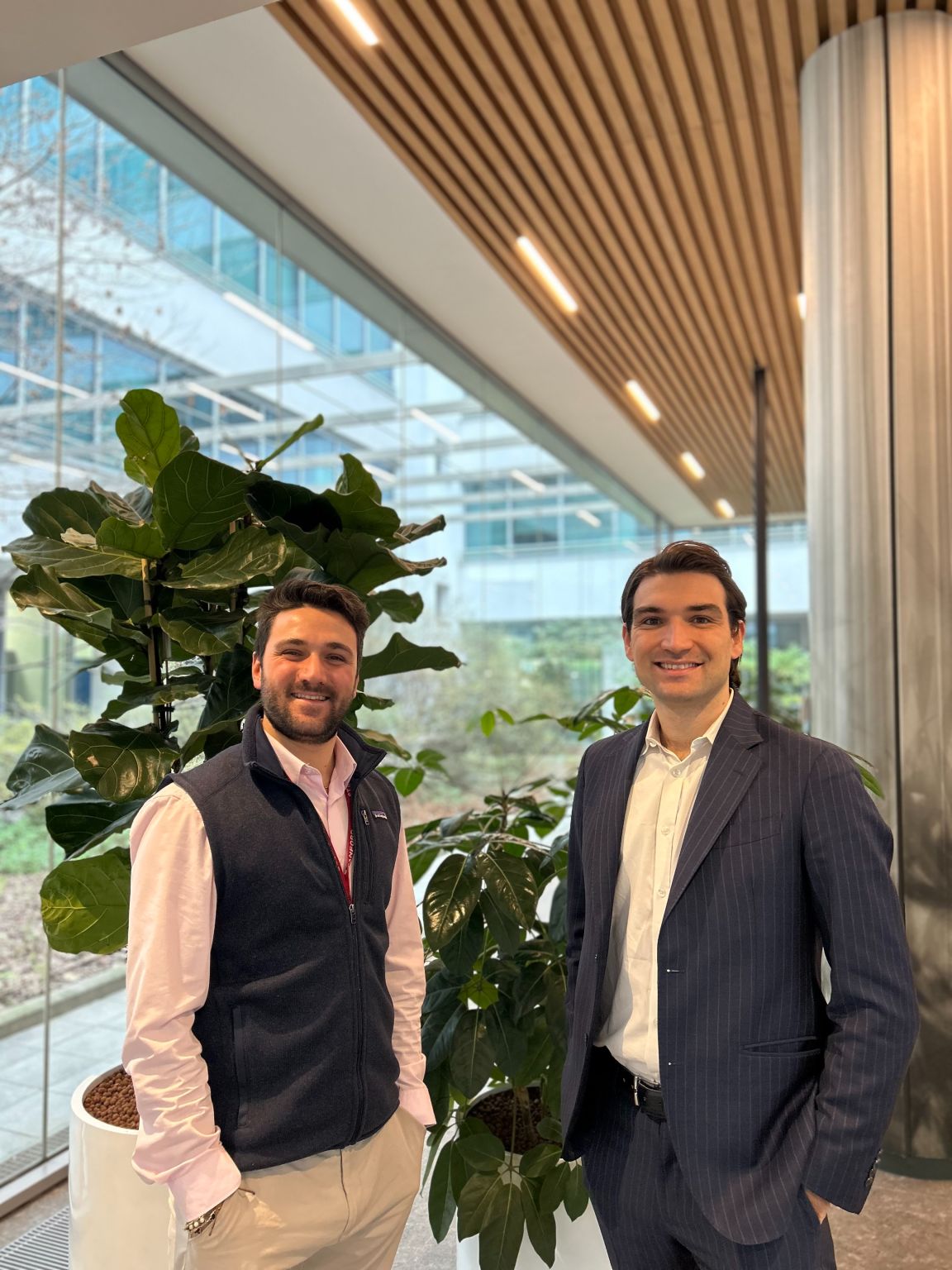
Quido has closed a €1.6 million funding round. The startup builds artificial intelligence solutions for private capital.
The round is led by Vertis Sgr through its funds "Vertis 6 Digital Sud" — partly financed by the European Union, Next Generation EU — and "Vertis Venture 7 Digital Puglia", with the participation of Cdp Venture Capital Sgr through "Frontech", the frontier-technology programme of Cdp Venture Capital's Rete Nazionale Acceleratori. Also taking part were SevenData, a company specialising in data analytics and advanced software development, Edrom, a holding and advisory firm focused on innovative startups and SMEs, and a pool of business angels and partners active in strategic consulting and Italian private equity.
Founded by Francesco Calia and Lorenzo Bergadano, Quido positions itself as a technological co-pilot: it supports private capital professionals across the entire life cycle of a deal.
On the legal side, Solving handled the transaction for Vertis and Quido's founders. Cdp Venture Capital Sgr was advised by the firm Giuliano e Di Gravio. The notary firm Ricci e Radaelli notai associati executed the capital-increase deed.
Who took part in the round, and in what capacity
The capital raised comes from a group made up of institutional investors, an industrial partner and a set of professionals who practise Italian private equity themselves. The distinction matters more than the total: these are categories of investor with different expectations and different contributions.
Vertis Sgr leads the round through two vehicles, "Vertis 6 Digital Sud" — partly financed by the European Union under Next Generation EU — and "Vertis Venture 7 Digital Puglia". Vertis is an independent asset manager specialising in private equity and venture capital for innovative SMEs: an investor that knows from the inside the profession the platform addresses.
Cdp Venture Capital Sgr participates through "Frontech", the programme dedicated to frontier technologies within the Rete Nazionale Acceleratori. Frontech is CDP's accelerator for startups working on artificial intelligence and deep-tech.
SevenData is a data analytics and business intelligence company, active in customer and market analysis and in lead generation. Its presence on the cap table is that of a partner working on structured data every day, not that of a purely financial investor.
Edrom is a holding and advisory firm focused on innovative startups and SMEs. Alongside Edrom, a pool of business angels and partners active in strategic consulting and Italian private equity took part — the very professional profiles that make up the platform's audience.
What "technological co-pilot" means here
The phrase is used loosely across the market. At Quido it has a specific meaning, and it is the criterion the product is designed against: the platform automates the repetitive work that precedes a decision, and leaves the decision to whoever has to take it.
It is the distinction between two categories of activity that fill an analyst's or a partner's day. The first is collection and normalisation: finding the company, retrieving filed accounts, reclassifying them, reconstructing the ownership structure, lining up the news, laying it all out in a readable document. This work is necessary, it demands care, and it contains no judgement. The second category is interpretation: working out whether the margin holds, whether the comparison with peers stands up, whether the corporate structure hides a complication, whether it is worth proceeding. This is where the investment thesis is built, and where the professional's contribution cannot be replaced.
Quido works on the first category. The company's stated mission is to free analysts and partners from repetitive work and return time to where it creates value: the investment thesis, the relationship around the deal, the decision. Repetitive work can be automated; judgement cannot.
The practical consequence is that the platform produces no investment recommendations and does not replace the diligence process. It produces the material the diligence is done on, in the form in which it is needed, with the provenance of every figure still legible.
Where the time goes in a private capital transaction
A deal's life cycle runs through phases with different characteristics, and time is consumed differently in each of them. They are worth walking through one by one, because they are the map the product is built on.
In origination the problem is coverage. Building a target list on a defined perimeter — a sector, a revenue band, a geography, a margin profile — means querying several sources and reconciling them by hand. A badly built list does not produce a visible error: it produces an absence. Companies that were never found appear nowhere, and nobody notices.
In screening the problem is volume. Every name on the list has to be looked at just enough to decide whether it deserves a closer look. The unit cost is low; the aggregate cost is not. This is the point at which a long list is implicitly shortened — not because the names at the bottom are worse, but because the time runs out.
In due diligence the problem is depth. Reclassified accounts across several financial years are needed, along with peer comparison, corporate structure, transaction history and relevant news. The material exists; the cost lies in gathering, normalising and verifying it.
In portfolio monitoring the problem is continuity. Holdings have to be followed after closing, accounts are updated, structures change, news arrives. Monitoring is the first activity to be sacrificed when the pipeline gets crowded, because nothing external imposes a deadline on it.
In exit the problem is reconstruction. A story several years long has to be put back together, often from documents written by people who have since changed roles.
None of these phases is hard because the data is missing. They are laborious because of the cost of collecting it, reconciling it and putting it back into a shareable form. That is precisely the perimeter this funding addresses.
What the platform does today
What follows describes what Quido makes available to client organisations at the time this article is published.
- Multi-criteria search across millions of Italian companies by sector, size, geography and financial signals, with filters and results ranked by relevance.
- Company profile with reclassified accounts, KPIs, peer comparison, news and corporate structure, generated automatically and kept up to date.
- AI agent reasoning over the platform's data: ask for a sector analysis, a target shortlist or a summary memo, and the answer comes back structured and sourced.
- Shared deal flow: the team's transactions on a single board, with custom stages, filters, ownership and follow-ups.
- Automated reports — one-pagers, reclassified accounts and memos — generated in the firm's own format and ready to share, with no manual formatting.
- Up-to-date financial data: accounts, news and market signals.
These are the components the raise supports: strengthening the product that already exists and the organisation that serves it.
A screening day, seen from the desk that does it
Setting out the steps is the most direct way to see where a tool like this intervenes.
The starting point is a perimeter: a sector, a revenue band, a geography, a margin profile. Multi-criteria search returns the companies that match, ranked by relevance. That list would otherwise take hours of reconciliation across different sources.
Screening then begins on that list. Each name needs a quick answer to three questions: how large it is, how it has moved over recent financial years, who controls it. The company profile already holds them, with reclassified accounts, KPIs, peer comparison, corporate structure and news.
The names that clear the filter have to be shared. This is usually the moment somebody opens a spreadsheet and starts retyping. The shared deal flow instead keeps the team's transactions on one board, with custom stages, ownership and follow-ups, while reports — one-pagers, reclassified accounts, memos — come out already in the firm's format.
What remains with the analyst is the part they were hired for: reading the numbers, judging whether the story holds, deciding what to take forward.
Data sources and traceability
To a finance professional, a figure without provenance is not data: it is hearsay. Quido integrates Italian public sources — the Chamber of Commerce and filed accounts — with proprietary data kept up to date in real time. Every piece of information remains traceable to its source.
Traceability is not a compliance detail: it is the condition under which work produced by the platform can enter a document that will be discussed in an investment committee. A number nobody can trace back to a source is a number that cannot be used there — and that therefore forces somebody to redo the same check by hand.
There is a second, less obvious consequence. When provenance is explicit, disagreement moves from the figure to its interpretation. Two professionals looking at the same reclassified accounts can argue about the merits without first spending half an hour establishing which version of the number is the right one.
Security and data handling
The infrastructure is European. Data is encrypted both at rest and in transit, and processing is GDPR compliant. Client data is not used to train models.
That last point is where the questions come first, and understandably so: anyone working on confidential transactions cannot afford deal material ending up, in any form, inside a model shared with others. It is also why the question belongs at the start of an evaluation rather than at the end, once a team has already put weeks into testing.
A related question concerns integration with what the team already uses. Quido connects to CRMs, deal flow systems and the Office suite, and exports to PDF, Word and Excel; a REST API is available for custom integrations. The relevant point for an evaluation is that adopting the platform does not require abandoning the tools around which a firm's habits are already built — the spreadsheet included.
Pricing without credits
Quido's commercial model is a fixed annual fee, with unlimited users across the firm and unlimited searches, analyses and reports. MCP, the mobile app and API access are included, as are onboarding, training and support.
The choice is deliberate, and it answers a side effect of the credit-based model common in the sector: when every search carries a visible marginal cost, teams stop searching. An analyst who knows each additional look consumes a credit takes fewer of them, and the platform ends up used below its capacity precisely in the phases — origination and screening — where it would help most.
Per-seat licensing has a comparable effect along a different dimension: it discourages extending the tool to people who would use it occasionally, which is exactly the group that benefits from occasional access to data already held in house.
The full comparison, line by line, is published in the pricing section of the site's home page.
Private company data: a collection problem, not an availability problem
There is a substantial difference between analysing a listed company and analysing one that is not, and it explains why private capital work retains a manual component that public equity research has largely left behind.
For a listed company, information is normalised at source: the company reports on a known calendar in a predictable format, and a chain of providers redistributes it already comparable. For a private company the starting point is the filed accounts, together with registry information. The data exists, it is public and it is verifiable — but it is not produced in order to be compared with that of another two hundred companies.
The practical consequences are familiar to anyone who has screened SMEs. Line items have to be mapped onto a common scheme before they can be set side by side. The formal sector classification often does not match the sector the company actually operates in. Ownership can run through intermediate holdings that have to be unpicked one level at a time. Relevant individuals appear in roles across different companies, and connecting them means working through several filings.
None of these steps is intellectually difficult. All of them are expensive in time, and all of them are repetitive. That is the exact definition of the work Quido sets out to absorb: the platform reclassifies accounts, reconstructs ownership, links people profiles to the deals they took part in and keeps the profile current, leaving the analyst the part that requires judgement.
Why capital also comes from people who do the job
One detail of the investor group deserves attention: alongside institutional investors sit a partner specialising in data analytics and a pool of business angels and partners active in strategic consulting and Italian private equity.
For a vertical product this is a useful condition. The main risk in a tool built for a specific profession is not technological: it is the distance between the people who design it and the people who use it. An investor who looks at real transactions every week recognises immediately when a feature solves a surface problem and leaves a real one untouched.
SevenData's presence is different and complementary: it is a company working on customer and market analysis and on lead generation, with structured data as its daily raw material. Domain and data are two forms of competence the product requires in equal measure.
How to evaluate a company intelligence tool
Most readers of a funding announcement are not assessing the transaction: they are assessing whether the tool makes sense for their own team. The questions that separate a serious evaluation from a superficial one are few and recurring.
What is the effective coverage on the perimeter that matters? Not coverage in general, but coverage of the sector, the size band and the geography the fund actually works in. The way to test it is to start from a list of companies already known internally and check how many the platform finds, and in what depth.
Is the data traceable? Every figure must be attributable to the source it came from. That is the requirement that lets the material enter a diligence document.
What comes out of the platform, and in what format? A tool that produces excellent analysis which then has to be retyped into the firm's template moves the work rather than removing it. The right question is whether the output is already in the form in which it will be used.
How is confidential data handled? Infrastructure, encryption, compliance and — above all — whether client material feeds model training.
What does heavy use cost? A consumption model makes evaluation look cheap and steady-state use unpredictable. A fixed fee makes the cost known in advance and removes the mental arithmetic that discourages usage.
How long before the team is productive? Time to activation is the most underestimated cost line, because it appears in no quotation.
What this announcement is not
The perimeter is worth stating, because a funding announcement is often read as more than it says.
It is not a product announcement: the features described above were already available to client organisations before the transaction, and this article announces no releases.
It is not a commitment on timing or on a roadmap: Quido does not communicate availability dates for future features here.
It is not a change to the data perimeter: sources, traceability and access rules remain as described above.
It is not a change to the commercial model: the fixed annual fee remains the form in which the platform is offered.
The company and the people
Quido was founded by Francesco Calia, who leads strategy, product and clients, and by Lorenzo Bergadano, responsible for the platform's technology and architecture. The team brings together people from finance and from technology, with one stated idea: repetitive work can be automated, judgement cannot. The full team is published on the About page.
Frequently asked questions
Who led the funding round?
The round is led by Vertis Sgr through its funds "Vertis 6 Digital Sud" — partly financed by the European Union, Next Generation EU — and "Vertis Venture 7 Digital Puglia".
Which other investors took part?
Cdp Venture Capital Sgr through the "Frontech" programme of the Rete Nazionale Acceleratori, SevenData, Edrom, and a pool of business angels and partners active in strategic consulting and Italian private equity.
Who advised the parties on the legal side?
Solving handled the transaction for Vertis and for Quido's founders; Cdp Venture Capital Sgr was advised by Giuliano e Di Gravio; the notary firm Ricci e Radaelli notai associati executed the capital-increase deed.
Who is Quido for?
Private equity, M&A, investment banking and advisory professionals — the people whose work runs through the origination, screening, due diligence, monitoring and exit phases described above.
Where does the platform's data come from?
From Italian public sources — the Chamber of Commerce and filed accounts — and from proprietary data kept up to date in real time, with every item traceable to its source.
Is client data used to train models?
No. The infrastructure is European, data is encrypted at rest and in transit, processing is GDPR compliant, and client data does not feed model training.
How long does activation take for a new team?
A team is typically productive in under a week. Setup, training and support are included in the fee.
Does Quido integrate with the tools a firm already uses?
Yes. It connects to CRMs, deal flow systems and the Office suite, exports to PDF, Word and Excel, and offers a REST API for custom integrations.
How is the platform accessed?
Access is restricted to client organisations. Anyone wishing to evaluate it can request a demo from the site.
In summary
Quido has closed a €1.6 million funding round led by Vertis Sgr, with the participation of Cdp Venture Capital Sgr through Frontech, SevenData, Edrom and a pool of business angels and partners from Italian private equity. The proceeds support the development of the technological co-pilot for private capital professionals across the entire life cycle of a deal.
Further reading on the product: Quido MCP and private company data inside AI and the mobile app for iOS and Android. The most common questions on sources, security, pricing and integrations are answered on the FAQ page.